Tuesday, 19 July 2011

Poems in Tamil


முனைவர் S. ஸ்ரீகுமார்
பேராசிரியர்,
தமிழியல் ஆய்வு மையம்,
S.D. இந்து கல்லூரி,
நாகர்கோயில்-629002
எண்ணச் சிறகுகள்.
மொழியை வசப்படுத்தும் ஒரு கலைதான் கவிதை. வாழ்வின் வறண்டுபோன உதடுகளை தன் நுனி நாக்கால் இன்னும் ஈரப்படுத்திக் கொண்டே இருப்பது கவிதை. இனிமையான கவிதைகள் பிரியம், துயரம், தேடல், ஆராதனை, கடுங்கோபம் என எல்லா அனுபவங்களையும் எளிமையான வார்த்தைகளால் பேசும். ஒரு சிறிய கருப்பொருளைக்கூட கவிதையாக்குகிற கலை வாழ்வனுபவம் வழங்கும் வரம். கவிதை பிரசவிப்பு என்பது ஒரு சுக அனுபவம் மட்டுமல்ல; அது ஒரு சௌந்தர்ய சக்தி. அதன் வீரியமும் வியாபிக்கும் திறனும் அணுவுக்குள் புதைந்து கிடக்கும் ஆற்றலைப் போன்றது. கவிஞர். த. மார்க்சிற்கு இது தெரிந்திருக்கிறது. கவிஞரின் முதல் அறுவடை இந்நூல்.
     ஒரு படைப்பாளி இந்தச் சமூகத்தின் நாடி பிடித்துப் பார்க்கும் மருத்துவராகவும், அவர் படைப்புக்கள் இச்சமூகத்தின் நோய் தீர்க்கும்  மருந்தாகவும் இருக்க வேண்டும். அவலங்களால் இதயக் குமுறல்களில் உண்டாகும் புலம்பல்களாக இல்லாமல், விடுதலை வேட்கை நோக்கிடும் விடியலுக்கான குயிலின் குரல் இந்த கவிதைத் தொகுப்பு. பகுத்தறிவு பொங்கிடும் சொற்களோடு இவருடைய ‘பா’ உலகம் தொடங்குகிறது. ஒவொரு பாவிலும் சமுதாய உணர்வும், உயர்வும் முகம் காட்டி மகிழ்விக்கின்றன. எதார்த்த வாழ்வை நேசிக்கும் கவிஞர் ஆகையால், யாருமற்ற வாழ்க்கை மரணித்துவிட்ட பாம்பைப் போல் இருண்மையானதாகக் கவிஞருக்குத் தென்படுகிறது. ஒட்டுத் துணி இல்லாமல், கொட்டும் பனியில் காய்ந்த ரொட்டித் துண்டுகளை இறுக்கமாகப் பற்றிக்கொண்டு ஓடும் ஆறு வயதுச் சிறுவனைப் பார்த்து குளிருக்கு இதமாய் இரண்டு போர்வையோடு படுத்திருப்பவனின் மன அவஸ்த்தை கவிஞரின் கனிவான இதயத்தைக்காட்டும்.
     இந்திய நாடு, மனிதர்களை வேட்டையாடும் கூடாரமாகிப் போனது கண்டு குமுறுகிறார். அவசர உலகில் பக்த்திகூட பாரதத்தில் பரிதவித்து நிற்கின்றது. வெள்ளைக்காரனை வென்ற மகாத்மா, சுதந்திர இந்தியாவில் இன்று தோல்வியின் அடையாளமாகக் கவிஞரின் பார்வையில் காட்சி தருகிறார்.
     கவிஞரது  கவிதைகளில், கவிதைக்கேற்ற வார்த்தைகள் உள்ளடக்கத்திற்கு ஏற்ப உட்கார்ந்து அழகு செய்கின்றன. அடிபட்டுக் கிடக்கும் கருநாகம், பழைய சைக்கிள் டயர்போல் சுருண்டு கிடக்கிறது எனும் வரிகளில் புதிய உவமை பளிச்சிடுகிறது. சிறிய ஓடைகள் தண்ணீரை வாங்கிக்கொள்ளும் வரை, ஆறு தன் ஓட்டத்தை நிறுத்திக் கொள்வதே இல்லை என்னும்பொழுது, கருத்தாழம் மிளிர்கிறது
இலையுதிர்  காலத்தின் கடைசி இலை, மழைக்காலத்தின் முதல் துளியாக ஆட்சி மாற்றத்தை காணும்பொழுது, கவிஞரின் சமீப கால உணர்வு வெளிப்படுகிறது. கிழிந்த ஆடையிநூடாக மார்பை ரசித்துப் பார்க்கும் வந்புனர்ச்சியாளர்கள், கருவறையில் பிறந்தனரா கழிப்பறையில் பிறந்தனரா? என்ற கேள்வியை எழுப்பும்பொழுது கவிஞரின் சமூக உணர்வு துல்லியப்படுகிறது. சோறு கிடைக்காத காக்கைகூட தலைவரின் தலையில் அமர்ந்து எச்சமிட்டு கோபத்தை வெளிப்படுத்துகிறது. உழைக்காது உண்ணும் மனிதனைப் பார்த்து, உழைத்து உண்ணும் தேனீக்கள் கூடக் கோபம் கொள்கின்றன. ஆனால் மனிதன்? என்று கவிஞர் கேள்வி கேட்பது நினைக்கத்தக்கது. புரட்சியின் அடித்தளம் வெகுசனங்களின் கோபம் என்பது வரவேற்கத்தக்க வரி.
     இன்றைய கவிதை உலகின் சிக்கல்களையும் சிடுக்குகளையும், எமகங்களையும் படிமங்களையும், மானுடச் சமூகத்திரலின் உள்ளார்ந்த பிளவுகளையும், நெருடல்களையும், ஏக்கங்களையும், சோகங்களையும், ஆக்கங்களையும் ஊன்றி உணர்ந்துள்ளார் கவிஞர். த. மார்க்ஸ். கபடமற்ற விழிகளால் கண்டுனர்ந்தவற்றைச் சிக்கலற்ற பொது மொழியில் சொல்ல முற்பட்டுள்ளார். மொட்டுக்குள் சிறைபட்டுக் கிடக்கும் மணம், கற்றைத் தழுவி கெளரவம் பெறுவதை யார் தடுக்க முடியும்? காற்று சங்கீதமாவதும், பேச்சு கவிதையாவதும், வண்ணங்களின் தெளிப்பு ஓவியமாவதும் சராசரித் தனத்தை மீறும் பொழுதுதான் நிகழும். போராட்டக் குணத்தோடு மீண்டும் கிளர்ந்தெழுவேன் என்று முத்தாய்ப்புக் கவிதை மூலம் சராசரித்தனத்தை மீறி எழுந்து, நிமிர்ந்து, கவிதை உலகில் வீறு நடை போட இக்கவிதை நூல் மூலம் கவிஞர் த. மார்க்ஸ் ஆயுத்தமாகிறார். கவிங்கறது கவிதைப் பயணம் தொடர வாழ்த்துக்கள்.

வாசிக்க சில கவிதைகள்:
காவியும் திரிசூலமும்
வெறுப்பை உமிழும் முகங்கள்
சோகங்கள் நிறைந்த நாட்கள்
கோபங்கள் சூழ்ந்த இரவுகள்
வன்முறையைச் சுவாசிக்கும் காற்று
அரைநிர்வாண மரக்கிளையில்
நடனமாடும் தீக்கதிர்கள்
குப்பைகள் கலந்த மண்ணில்
பொம்மைகளோடு தன்னந்தனியே
அநாதையாக்கப்பட்ட குழந்தைகள்.

எங்கும் மரண ஓலம்
சிதிலமடைந்த குடியிருப்புகள்
சிதறிப்போன நம்பிக்கைகள்
அன்னை தேசத்தில்
அன்னியர்கலாகிப்போன அப்பாவிகள்
மனிதர்களை வேட்டையாடி
மகிழும் நரபளிக் கூட்டம்
மகளிர் கற்பைச் சூரையாடிப்
புரளும் வன்புணர்ச்சிக் கூட்டம்
மதவெறியாட்டம் முடிந்தது

திரும்புகிற இடமெல்லாம்
இரங்கற்பாக்கள்  மட்டுமே
கேட்பவர்கள் யாருமில்லை
வார்த்தைகள் எதுவுமில்லை
காலடி ஓசையில் எதிரொலியோடு
உரையாடிச் செல்லலாம்.
உறிஞ்சிய இரத்த நெடியில்
சிறிது இளைப்பாறுகிறார்கள்.

மீண்டும் மதவாதிகளுக்குப்
பசி எடுத்தால்
மற்றுமொரு முறை
காவியும் திரிசூலமும்
மனித வேட்டைக்கு
வலம் வரும்.
ஓடி ஒளிந்து கொள்ளுங்கள்
காந்தி பிறந்த வீட்டுக்குள்....


உடையாத பாட்டில்களும்
உடையும் மனிதமும்

அழுக்கான பள்ளிச்சீருடையில்
சோகம் படராத முகச் சிறுமி
தோள்களில் கோணிப்பை
தொலைந்து போன வாழ்க்கை.

காந்தம் பொருத்தப்பட்ட தடியால்
குப்பைகளைக் கிளரும் கரங்கள்
காந்தம் நோக்கி வரும் குப்பி மூடிகள்
வறுமை தேடி வரும் துயரங்கள் போல்.

குனிந்து முடிகளைப் பொறுக்கும்போது
கிழிந்த ஆடைகளி னூடாகத் தெரியும்
மார்பை ரசித்துப் பார்க்கும்
மானங்கெட்ட வன்புணர்ச்சிக் கூட்டம்.

இவர்கள் கருவறையில் பிறந்தனரா?
இல்லை கழிப்பறையில் பிறந்தனரா?
இருப்போர் ஆடை கிழிந்தால் பாவனை
வறியோர் ஆடை கிழிந்தால் வேதனை.

பெண்ணே! கிழிந்தது உன் ஆடையல்ல
சுண்ணம் பூசிய மனித முகங்களோடு
சிதிலமடைந்த ஜனநாயகமும்தான்.

முழுப் புத்தகத்தையும் வாசிக்க தொடர்பு கொள்ளலாம்: drtmarx@gmail.com


Thursday, 14 July 2011

Social Documentary

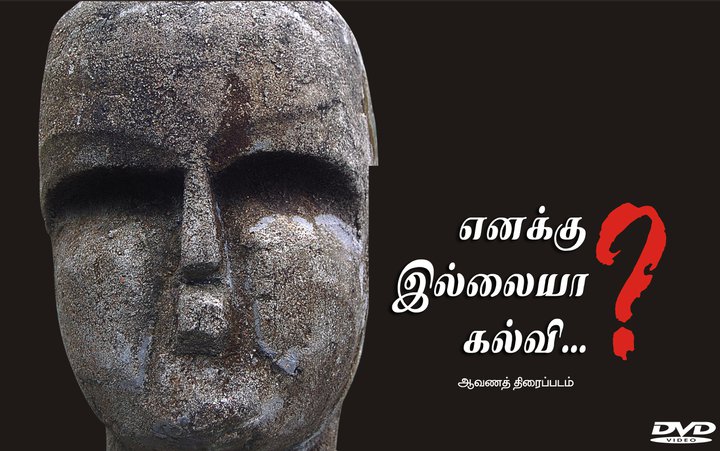
Don’t I have education?-A Social Documentary by Bharathi Krishna Kumar- Need of the hour


Ever since independence, education has been the most neglected sector in India. Many committees and commissions have been tried in vain to review the existing system of education to make it more responsive to human needs. Nothing tangible has been achieved in sixty five years and education today is as far removed from day-to -day life as it was in pre- independence India.   

Elementary education has remained basically a mirage and has not been realized properly. School buildings are non-existent in Dalit and tribal areas, and in remote villages. In some villages, schools are used as stop-gap cattle shelters. Teachers and the study materials they provide are not up-to-date. Primary education is also in a shamble. Poor parents and students are not properly motivated to avail of the available educational facilities. It is imperative that the existing system of education must be revamped immediately if it is to have any sense in today’s life. 

Even after 65 years of independence, India, the greatest democracy, is still struggling with its educational policy.  It is high time that we should have a uniform education system all over the country. The basic needs of every Indian irrespective of class, caste etc is to get uniform education by which class concept will be eliminated and everybody can get better education. If we have uniform education, poor children can also get better education along with the other different sections of population. Caste and Gender discrimination in education sector will also be reduced. Government institutions will get brighter students, who are now going to private schools with an illusion that they provide quality and better education. Uniform education system will proceed towards sustainable education, which may lead to a stronger socio-economic system.
India is ‘shining’, but with a population of over a million poor students denied the right to quality education, the socio-economic progress is lop-sided. While one part of India is a vibrant economy, inequality is a major social problem.  Faced with no options where they live, many with money/power migrate to urban areas in search of schools and better education opportunities; by living in slums the poor end up without the basic education. Most of the children from the rural areas have never seen the inside of the so called state-of- the- art classroom. Of those who go to school, the dropout rate is high.
Shame on a nation that couldn’t provide its citizens free quality education! Don’t I have education?-this documentary film by Bharathi Krishna Kumar focuses on the need for free quality education for all. This film will be an eye-opener for all who /half bakedly/blindly/selfishly oppose uniform education for all and will persuade people to fight for the right to uniform education.
I personally congratulate Comrade. Bharathi Krishna Kumar on his campaign for uniform education with his third social documentary. Earlier he has produced Ramaiyavin Kudisai  -Based on Keelavenmani Massacre, and Endru Thaniyum-Based on Kumbakonam School Fire tragedy.
Copies of the documentary can be had from: Bharathi KrishnaKumar, Rainbow Info Media, 7/4, Seventh Street (Ground Floor), Dasarathapuram, Saligramam, Chennai-600093. Ph: 044-23767990


National Seminar on Dalit Literature

National Seminar on Production and Reception of Dalit Literature
[Release of Seminar Abstracts-Dr.T.Marx, Prof.Vengutaramanae, Prof.K.Chellappan, Shri.Choletti Prabahar,IAS, and Prof.S.Murali (Left to right)]
The National Seminar on the Production and Reception of Dalit Literature was held on 30th and 31st March 2011 in the Department of English, Pondicherry University. Many Dalit literature experts and scholars contributed their invaluable opinions and critical views on Dalit literature that has sprung up in several Indian languages and in English translations. The Seminar was organized by Dr.T.Marx and the overwhelming support and cooperation of I MA students made the seminar a grand success. All the faculty members of the Department extended their kind cooperation for the Seminar. 

The presidential address was given by Prof.S. Murali, the Head of the Dept of English, Pondicherry University. Mr. Cholleti Prabhakar I.A.S, Secretary to Government of Puducherry, and Prof.Vengutaramanae, Dean, School of Humanities, Pondicherry University offered felicitation. The most remarkable event of the seminar was the inaugural address delivered by the renowned scholar in English literary studies Prof. K. Chellappan, Former Director, State Institute of English. He illustrated the quintessential traits of the Dalit literary writings as a contradicting genre to the mainstream literature for its political and cultural purposes. He also pointed out the nature of Dalit literature as a revolting enterprise against all external and internal oppressions. He gave an analytical example by his reading of the novels of Sivakami and Bama as Dalit feminist writings. Around 50 papers were presented by the researchers and writers of Dalit literature across the nation, among whom the prominent few were Dr. S.Prabahar, Head, Dept of English, Manonmaniam Sundaranar University, Tirunelveli, Dr.Armstrong from the University of Madras, Dr.Ajayan, Sri Narayana College, Kollam, Dr. MB. Manoj, Department of Malayalam, Kottayam University, Kerala, Mr.Binu Pallipat, Freelance writer cum poet, Kumali, Dr. J.Bheemaiah  from the University of Hyderabad, Mr. Viswanathan, Reader’s Editor, The Hindu and Mr.A .Xavier, Director, Dalit Intellectual Forum, Trichy.

The event was designed with multi-dimensional tasks which, transcending the literary boundaries, focused on the social aspects of Dalit liberation and the still-continuing atrocities against the out-caste people. Speakers and paper presenters largely concentrated upon these aspects in the two-day seminar. A symposium on the atrocities against Dalits had also been arranged specifically for this kind of discussions. Dr. S. Prabahar convened the symposium, in which Gauthama Sannah, Advocate Madras High Court, Freelance writer cum orator Kudiyarasan and Dr.Kesava Kumar, Department of Philosophy, Pondicherry University participated. The seminar got a successful ending with the valedictory address of Prof. Ramadass, Director, Studies, Educational Innovations and Rural Reconstruction. The I year PG students’ support was indeed marvelous throughout the event. The theme song produced by I MA students deserved the attention of the audience. Another important event was the flute music by Binu Pallipad.
Educate! Organize! Agitate! –Dr.B.R.Ambedkar

Sunday, 10 July 2011

Tribute-Karthigesu Sivathambi

Tribute- Karthigesu Sivathambi: A Scholar Extraordinary
Karthigesu Sivathambi, an extraordinary scholar applying the multi-disciplinary approach as originally promoted by the late K.Kailasapathy, another towering figure in the academic and literary scene and an intellect much adored and highly respected by fellow Sri Lankan intellectuals, passed away in his home in Colombo on 6th July 2011 at the age of 79.

An Emeritus Professor of Tamil in the University of Jaffna, Mr. Sivathamby is known as an outstanding Tamil scholar, specializing in the social and literary history of Tamils, culture and communication among Tamils, Tamil drama and literary criticism. He has authored about 70 books and 200 research papers in Tamil and English.

Born in Karaveddi in Jaffna in 1932, he studied B.A. (History, Economics and Tamil) and M.A. (Tamil) at the University of Ceylon and received his Ph.D. (Drama in Ancient Tamil Society) from the University of Birmingham in 1970, where he studied under Marxist scholar George Thomson.

After serving as a simultaneous interpreter in the House of Representatives of Parliament of Ceylon, he taught at Zahira College, Vidyodaya and Eastern University of Sri Lanka. He was a visiting professor of Tamil at the University of Madras and the Institute of International Studies, Chennai. He was also a senior research/visiting fellow at Jawaharlal Nehru University, Tamil University, Thanjavur, and the University of Cambridge.

He has served as chairman of the Coordinating Committee of Citizens of North and East of Sri Lanka; chairman of The Refugee Rehabilitation Organisation (TRRO) – Jaffna, during 1986-98, and served as the patron of the Colombo Tamil Sangam.

On behalf of the Tamil Community, I offer my heart-felt condolences to his family. Mr. Sivathamby’s death, indeed, was an irreparable loss to Tamil literature and the Left movement.

Thursday, 30 June 2011

make your trip

Pichavaram Mangrove forests.

How to reach: If you are from Chennai or Pondicherry, go towards Chidambaram via Cuddalore and immediately after a small hamlet called Mutloor, take the by-pass road and drive slow. You will find a board directing you to Pichavaram. From the by-pass drive further for 10 more kms towards the coast. If you are from other parts of the state, just take a bus from Chidambaram and it will take 45 mins to reach Pichavaram.
Ideal time: August to October and January to March.
What to see:  Pichavaram Mangrove forests. Pichavaram the second largest Mangrove forest in the world is one of the unique Eco-tourism spots in South India. The backwaters, inter connected by the Vellar and Coleroon river systems, offers waterscape and back water cruises. Pichavaram consists of a number of islands interspersing a vast expanse of water covered with green trees. The area is about 2800 acres and is separated from the sea by a sand bar which is a patch of extraordinary loveliness. The Pichavaram mangroves attract an appreciable bird population of 177 species. You can take a boat from TTDC boat house. Rates will differ according to the no of persons. Usually they charge 260/- for four persons. (for manual boats)  Pl take a manual boat so that you can have the pleasure of watching the forests. If you take mechanized boats, the pleasure will be lost. Earlier there was a lake side Guest House run by the TTDC. Now it is not functioning. If you want to stay, you have to come back to Chidambaram.
Things to do: Go around 10-11 am (if the weather is alright) or after 3 pm (In summer). The information board says that the boating service starts at 8. am. But sometimes the water level will be very low and boatmen will have to wait for water level to increase. Have some eatables and a bottle of water. Have a good camera and take photos of your choice. Take a cap to cover your head.
Things not to do: Usually they stop the boat in the middle of the forest for a few mins. At that time, don’t try to step outside. The surface may look dry but if you step in then you will be in trouble. Take food if you want to spend the full day there. There is one restaurant but it is not advisable to take food there. Don’t spend time there after 6.30 pm.
Have a pleasant and safe journey.

Jammu.

How to reach: If you are from Chennai, take a flight to Delhi and then onward flight to Jammu. (No direct flight service from Chennai to Jammu). Once you reach Jammu airport, take an auto or prepaid taxi to Hari Market. Hari market is located at the heart of the town. Central bus stand, Raghunath Mandir and Hotels are located only near Hari Market. If you are new to Jammu, then take rooms in Hotel City Heart. Contact Mr.Naresh (09858634335) for booking rooms. Tariff will be 1000/-, 1200/- and so on. Rooms are good. Food is also good. Room Service is excellent. Even of you are not good at Hindi, persons in this Hotel speak good English. From the central bus stand or from a nearby mini bus stop called Jewel Stop, you can get buses to all major places.       
Ideal time: September to February. During other months it will be terribly hot.
What to see:  This depends upon your interest. If you are a religious person, then Jammu is really good. Raghunath Mandir (walkable from Hari market), Vaishno Devi temple (2hrs from central bus stand and a 13 km walk from the bus stop to the top of the hill. After walking for 6 kms, battery cars and horse riding are available but you need to wait for hours together. But it is religious to walk for the entire 13 kms. It will be ideal if you start around 4 pm from central bus stand so that you will reach the stop around 6 and it is easy to walk during night and get darshan around 12 0r 1 in the night. Temple is open 24 hrs. ) For non-religious persons, Rajindar park (just 10 mins from central bus stand. 6 rs ticket in mini buses), Bahu Fort (located adjacent to Jammu University-Just 15-20 mins and 6 rs ticket in mini buses) and Hari Niwas Palace (just 30 min if you take an auto). Some other tourist destinations are there but will take more time (50 and more kms from Jammu town)       
Things to do: Take a good binocular. Take shawls to cover your children during night. Don’t purchase things for the rate displayed. Bargain pl. There are some shops with the boards Jammu & Kashmir Handloom Corporation. But then these shops are also privatized and don’t be carried away by the name board. If you don’t know Hindi and even if you know Hindi, the shopkeepers try their level best to loot you. Beware. There is one super market where you can get things for a fixed price. It is Baniya Super market (0191-2570298) located in Raghunath Bazaar. You can purchase in this shop. And one thing you should purchase is dry fruits. Good variety of dry fruits available in most of the shops in both Hari Market & Raghunath Bazaar. Do make use of buses or mini buses for all the places you want to visit. It is very cheap and there are frequent services.
Things not to do: In other airports, we are supposed to check in 2 hrs before departure but in Jammu you can be there even earlier. Unlike other airports, security check up takes more time because they check us at five to six levels. It takes more time. Then don’t purchase any electrical or electronic items for security reasons. When you purchase clothes like Kashmiri Shawls etc, pl make sure of the quality. Don’t purchase anything at the rates displayed. Don’t take food in hotels inside the bus stand as they are not hygienic. When you visit temples, pl don’t take your cameras or mobile phones. Even if you have, you have to deposit all these things in a locker at the temple gates and then you can enter. Don’t hire an auto unless it is badly needed because they will charge more. Stay alert always. Keep your valuables safe.

Have a pleasant and safe journey.

Alamparai Fort.

How to reach: If you are from Chennai, take bus to Pondicherry via ECR. After Kadapakkam inform the bus conductor to stop at Alamparai Fort Junction. From there you can take an auto to the Fort. (usually they charge 50 to 70 rs) Fort is located at the tranquil backwaters. If you are from Pondicherry you can take a bike or car. It is just 14 kms from Marakanam. Pl don’t fail to notice the board Alamparai Fort 3kms from ECR.  
Ideal time: Throughout the year. (after 4 pm)
What to see:  Alamparai Fort.    The ruins of Alamparai Fort on the land overlooking the sea. Constructed in the late 17th century during the Mughal era, the Alamparai Fort once had a 100-metre long dockyard stretching into the sea, from which cloth, salt, and milk products like ghee were exported. During 1735 AD it was ruled by Nawab Doste Ali Khan. In 1750, for the services rendered by the famous French commander Duplex to Subedar Muzarfarzang, the fort was gifted to the French. When French were defeated by the British, the fort was captured and destroyed in 1760 AD. More recently the structure was damaged in the 2004 Tsunami. Local fishermen assist tourists in a pleasurable boating experience around the fort.
Things to do: It is always better to plan your trip to this fort either in a bike or a car not by bus. Have some eatables and a bottle of water. Have a good camera and take photos of your choice. Take a cap to cover your head. Go in a group. Go around the fort and if you have the sense of appreciating the architectural excellence or the relics of the past, then you may perhaps enjoy the spot. If you don’t find it interesting go and sit in the beach. Take bath only with the assistance of local fisher folk.
Things not to do: Don’t go alone and don’t take your boy friend or girl friend alone. (Very dangerous place) Don’t take children into the backwaters. (very risky). And the most dangerous thing is to take bath in the beach where river water is merging with the sea. It has powerful currents and you will definitely be washed away. Even if you know swimming, there is no use. Villagers say more than a dozen tourists drowned and lost their lives. Just watch the serene beauty of the fort and the backwaters. Never dare to swim or take bath in the beach or the backwaters.         
Have a pleasant and safe journey.

Tranquebar Fort.

How to reach: Tranquebar is 280 kms from Chennai airport.
It is 32 kms from Nagapattinam and Chidambaram.
It is just 10 kms north of Karaikal, a part of Pondicherry Union Territory. 
There are no hotels in Tranquebar but persons who prefer luxury can stay at the Hotel on the beach or the one run by TTDC. It is better to stay in Karaikal which has a lot of Hotels that will suit your budget. Just take any bus from Chidambaram to Karaikal/Nagapattinam and get down at Karaikal. It will not take more than ten mins.  
Ideal time: September to February.
What to see:  Tharangambadi (or Tranquebar) is a serene coastal hamlet 10 km north of Karaikal, near the mouth of Nandalar, a distributary river of the Cauvery River. It is a part of Nagapattinam district. It was a colony of the Danish from 1620 to 1845. There is a danish fort on the beach. The Fort was first based in 1620 A.D. Another attraction of the place is the beautiful church of Bartholomaus Ziegenbalg. A museum is there to cater your academic needs. 
Things to do: Go after 4 pm. If you want to spend more time in the fort, then go a little early beause the fort is open for public only up to 5 pm. After 5 pm, you can sit and relax in the beach. Then move gradually to the church and then perhaps to your hotel in Karaikal. Have some snacks and a bottle of water. There won’t be any shops near the fort. But on weekends there will be a few wagon venders selling nuts, ice-creams etc. Tranquebar is also environmentally healthy in that it is considered an 'Ozone Rich Beach' due to the presence of profuse amounts of ozone. Sit in a straight position and take a deep breath. If you know meditation or yoga, it will be useful for you. Even if you have splitting headache, sit and breathe, you will be relieved within minutes. No magic. Sheer geographical advantage.  
Things not to do: If you travel by car or bike, don’t keep any valuables in your car or bike box. At any cost, don’t try to take bath or swim in the sea. Don’t spend time there after 6.30 pm.
Have a pleasant and safe journey.

Vailankanni.

How to reach: Vailankanni is well connected by roads and not perhaps by rail or air. Buses are plying to this holy shrine from all parts of Tamilnadu. From Chennai, every ten mins there is a bus and from Trichy or Madurai also bus services are frequent. By train you can reach Nagapattinam and take a bus. Just ten min drive from Nagapattinam.        
Ideal time: September to February. During the Annual Car Festival (approx August end or September first week) there will be heavy rush.
What to see: Shrine of the Lady of Good Health, Vailankanni & the beach.  
Things to do: Visit the church in the early mornings or late evenings. Take food in a good hotel. Usually in this place food is not good in any hotel including the church canteen. Rarely a hotel that provides good food and somewhat better hygienic atmosphere is Hotel Dravidar, just opposite to the Shrine Office. But the best option is Hotel Palace inside Nagapattinam bus stand. If you have a vehicle then you can just drive and take delicious non-veg food(Paraotta/Naan+Butter Chicken, Biriyani+ chicken/prawn fry) in Hotel Palace. Having food there will be a life time experience. If you are new to the place and searching for good rooms, the best choice is Hotel Welcome just adjacent to Hotel Dravidar.      
Things not to do: Don’t take fish on the beachside restaurants. Hotels in this place are really bad and unhygienic. If you travel by car or bike, don’t keep any valuables in your car or bike box. At any cost, don’t try to take bath or swim in the sea. In this part of the sea, there are many poisonous water snakes/sea creatures which may harm you. In fact, there is a warning board in the beach. Hundreds take bath ignoring the warning. But don’t dare to ignore the warning. Then you will be trouble.
Have a pleasant and safe journey.

Mumbai.

How to reach: No need to give tips. Everyone knows.        
Ideal time: August- September & January- March.
What to see: India Gate, Hotel Taj, Elephanta Caves (from India Gate you can take tickets for boating to Elephanta. Then you have to walk for 2 kms and then climb a hill for another 1 km. (for the first 2 km stretch there is a heritage train service which is usually crowded. Old age persons and sick persons can avoid visiting Elephanta), Bombay Natural History Museum, Nehru Science Centre, and Taraporewala aquarium.
Things to do: Immediately after reaching the Mumbai airport take a call taxi or auto and move to Villa Parle, a place where you can get somewhat good hotels. In Mumbai, hotels will be very expensive and very much congested. So choose the right hotel to stay. Don’t fail to visit museums.           
Things not to do: Pl be careful when you travel by Mumbai trains which will be overcrowded always. People will rush to enter trains. Keep your purse and mobile phone safe.  
Have a pleasant and safe journey.


Monday, 27 June 2011

100 Letters to The Hindu


                                              My responses to Social Issues in book form. 
Foreword to the book by

Dr.S.Prabahar
Professor & Head
Department of English
Manonmaniam Sundaranar University
Tirunelveli. 627112
India.


Awareness of a social problem is different from analyzing it. Many a person is conscious of the hardships that one faces in the society, but quite haplessly manages to live with them.  Mere rumination over the causes and effects of a social problem will not in anyway help one to overcome and eradicate the social evils of the society. Discursive responses from people with ideological convictions to the contemporary social occurrences, be it beneficial or detrimental, are received and regarded as the estimation by the experts.  These opinion leaders, often, opt for a medium that suits them to realize, record and propagate their observations on the socio-cultural, political, religious events and news. 

In this regard, letters to the editor, credibly a modern literary genre of its own kind, plays a significant role in understanding and interpreting the news. In fact, letters written to the editor can be called views on news. Similarly, the leading newspapers and magazines choose to publish those views, which are often objective and accepted. Nevertheless, some newspapers dare to publish unorthodox views of the general public to sensitize the readers with counter ideology. Incidentally, The Hindu and Dr.T.Marx form a formidable combination with their concurring and conflicting views on social issues. Dr. T.Marx’ thought provoking views on personalities rediscover their social stature and redefine their relevance in the modern society. His views on social issues such as reservation, religious minority, caste, and all forms of exploitation underscore that he is socially conscious and aspires for a demystified secular state.
           
Dr. T. Marx, with his sentiments and convictions expressed in his letters, promotes  non-discrimination and tries to place the human being as the central value and concern, in such a way, that nothing is above the human being and no human being is above another.   As an ardent reader of Dr.T.Marx   and a fellow activist, I am indeed delighted to see his letters in a book form and write the foreword to the book. I wish him all success.


A few pages for your reading…

In response to...
Five years after Godhra and the pogrom 28-02-2007
Five years later, there is no violence but the atmosphere of fear and prejudice still prevails. After the attacks, the minorities have been `taught a lesson.' They must now live as `second class citizens' in Gujarat, the `Hindutva laboratory' to build the `Hindu Rashtra.' Gujarat is a society divided where minorities are segregated, face social and economic boycotts, and constantly fear for their safety. Muslims have been pushed into ghettos. [… … …] The Sangh Parivar organisations make no bones about this. Across the State, they have put up boards saying: `Welcome to the Hindu Rashtra.' It is understood that not all are welcome. Some are still camping in the darkness, waiting for the light.
01-03-2007
Even after five years of the riots, constant fear engulfs Muslims amid peace. Since the riots, the polarisation between the communities has acquired a physical dimension. Muslims are subjected to a higher than usual level of abuse. Hindu communalists send veiled threats to Muslims that their safety depends on the goodwill of the majority community. Everyone knows the peace in Gujarat is fragile. Nothing can bring permanent peace except adherence to our great secular tradition.

In response to...
The anti-Islamic polemic 29-10-2006

Iran being a Muslim country, I was shocked to hear their views on Islamic cosmography and the place of the Koran in the present volatile situation. They were clearly supporting Huntington's thesis of the "clash of civilizations" as we moved to the subject of violence and terrorism. The dichotomy crystallised in their views that the West and the non-Islamic are socially stable whereas the Muslim world was deeply promiscuous, given to pleasure and unrestricted by social dictates. The only thing I felt that was lacking were khaki shorts and saffron flags; the neo-Nazi-like stance was disquieting, for it threw light on the future of Indian and world politics. [… … …]
Indeed it was a case of knowledgeable ignorance so central to the complex relationship of the West and the East. Intellectuals and religious leaders have to disapprove the Western discourse of regarding Islam as a incensed cauldron of bigotry and a dumping ground for censure.
05-11-2006
The West is paranoid about Islam. Islam does not teach terrorism and no Muslim is a born terrorist. No madrasa teaches terrorism. The West disseminates certain lies that Islam was spread by the sword, it believes in forcible conversion of other people, and it teaches its adherents to wage Jihad against non-Muslims. The absence of a moral authority among Muslims such as the Pope, the absence of a society scrupulously practising the lofty Islamic ideals and the tendency to focus on theological differences rather than on social and ethical concerns are factors hindering the Muslims from clarifying Islam's position on terrorism.
Islam being the fastest growing religion in the World poses a threat to American hegemony. As a result America breeds contempt for Islam and spreads misinterpretations about Islam.
In response to…
Bhopal: GoM report on Monday
NEW DELHI: The Group of Ministers (GoM) on Bhopal, which met on Friday, will work through the weekend and submit its report to the Cabinet on Monday, ahead of Prime Minister Manmohan Singh's 10-day deadline. The mood at the meeting, sources said, was “that something should be done, and done quickly.”
The GoM's recommendations will be classified broadly under three heads — legal issues, compensation and remediation measures/disposal of waste. They will be first discussed “separately,” after which “a comprehensive view,” will be taken, Union Home Minister P. Chidambaram, heading the GoM, told journalists. He said: “We will give our best and most sympathetic consideration to all those people who have suffered as a result of this tragedy.”
21-06-2010
The victims of the Bhopal gas disaster have fought for two-and-a-half decades for justice, only to get the “utmost sympathy” from the Group of Ministers (June 19). Instead of appeasing the victims with a compensation package, the government should demand additional compensation from UCC/Dow for disbursement among victims after re-categorisation, inclusion of second-generation victims and fresh determination of amounts. Successive governments have displayed utter callousness towards the Bhopal victims and tried to accommodate the killer company in many ways. The victims have been denied not only adequate material compensation but also proper medical care, rehabilitation and other forms of support.
The government should develop a strategy to assure suitable employment to the families of the victims, evolve a broad framework of treatment for gas effects, and take over the task of cleaning up the former UCIL plant site in a transparent manner.

For full text contact drtmarx@gmail.com